Self-Imposed
On hitting deadlines nobody set but me.

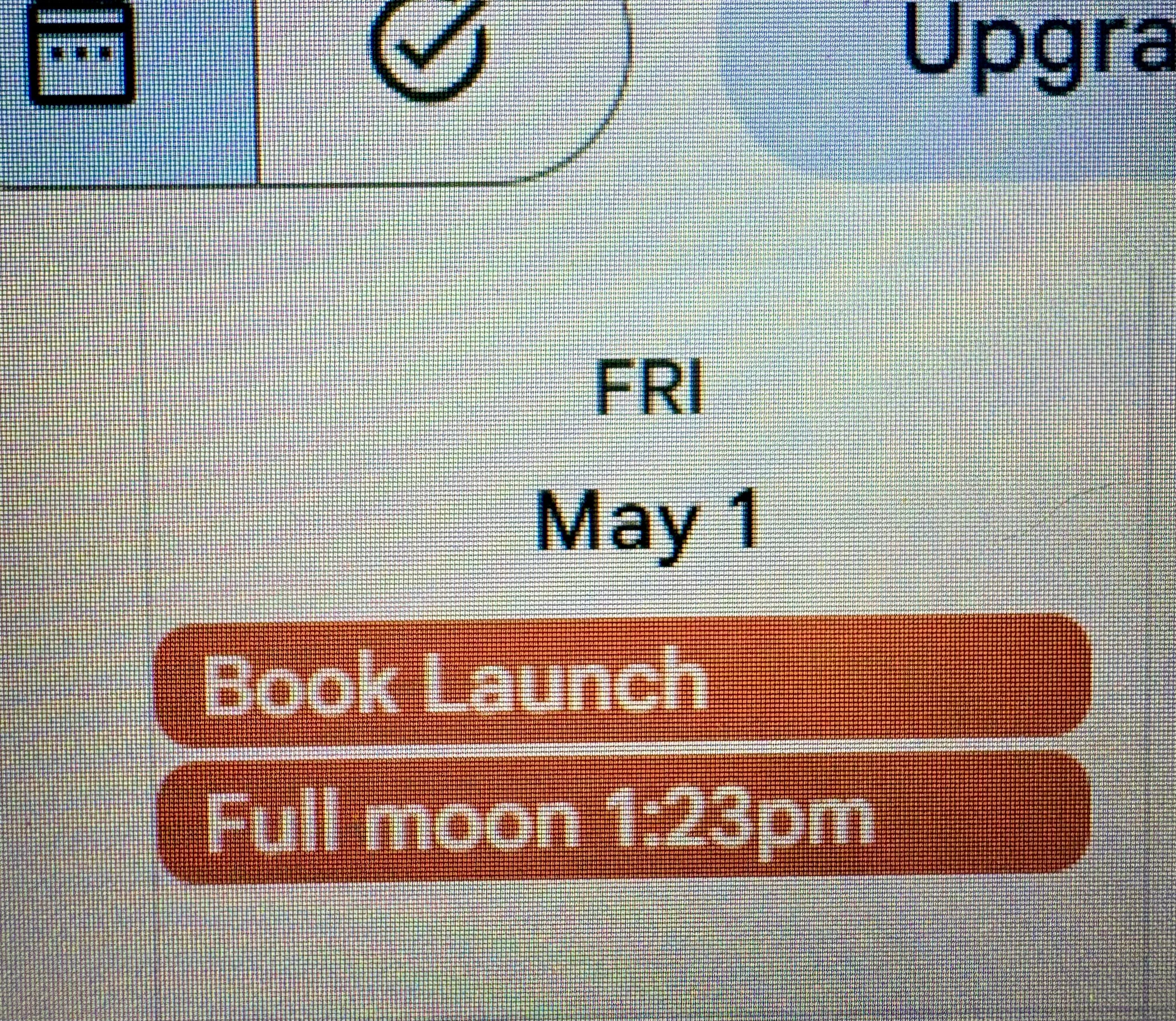
Thursday afternoon, around three, my husband texted me. He’d just left the inspection of the house that our son and his girlfriend are buying. Everything looked pretty good, which meant that one of the last hurdles to getting the deal closed had been cleared, and they were going to celebrate with beers and sandwiches.
“Hey, come join us! Sitting outside under an awning, enjoying the breeze!”
I’d been grinding on the book since 7:00am. I hadn’t showered. I hadn’t eaten. I was still in boxer shorts and a tee shirt. If anyone needed a sandwich and a beer, it was me.
I said no. I told him I couldn’t, that I had to get this done, that I was sorry but I just couldn’t. I hung up and sat there for about thirty seconds before I heard a voice from somewhere inside me ask a reasonable question, which was: Andrea, what the hell are you doing?
My son had actually called first and I’d given him the same speech about the book and the deadline and how I just couldn’t. He hung up, presumably thought about it for a minute, and then sent in the cavalry. Tuck texted me a few minutes later. That was the second blow to my reasoning, and the bigger one. My son wanted me at his mini-celebration and I was willing to miss it because I’d decided that a self-imposed deadline that I was on track to meet was more important than something that was happening right now with the people I love, who are about to do something pretty big.
The book is important. It’s also not cancer research. It’s a 150-page book about using creativity to transform an aspect of your life so that it feels more like your life. If celebrating milestones with your family doesn’t fall in the category of things that make your life feel like your own, I don’t know what does. And skipping that to hit a self-imposed deadline makes no logical sense. Nobody is grading me on this. The person who set May 1st as the deadline is me, and the only person who’d care if I missed it is also me.
So I threw on some clothes, made myself as presentable as I could on short notice, and went. Two beers, one sandwich and a low-key Yay! The inspection was good! celebration later, and I felt normal (relative term) again.
Here’s the thing about the deadline though. I set it and have been committed to meeting it, because Steven Pressfield was right when he wrote in The War of Art that the end is the hardest part of any creative project, and that Resistance, with a capital R, pushes hardest at the finish line. Imposter syndrome shows up at the end. Perfectionism shows up at the end. The voice that says one more pass, one more edit, one more month and then it’ll be ready shows up at the end.
That voice has been winning for about 25 years.
I have known everything in this book for a long time. I could have written it 10 years ago. I could have written it 15 years ago. I didn’t, because every time I tried and got close, I let myself off the hook. I had all the excuses down pat: Not enough time, not the right moment, not quite ready, need to think about it more…
The version of me who’s been not-writing this book for 25 years is very good at her job. The deadline is how I’m beating her this time. May 1st isn’t some magical date, but making a commitment to myself and keeping it is the only way I know to stop being a person who sells herself and her life short. That’s the argument and the method of this book running on its author in real time, less than a week out from launch.
Your identity doesn’t change when you finally feel ready to do the thing. It changes when you do the thing.
I have no delusions about this book. I’m not going to win a Pulitzer for it. I know what it isn’t, but more importantly, I know what it is. It’s a 150-page book that reflects 25 years of my life and my work and the stories that came out of both, and it’s the closest thing I’ve made to a complete and honest statement of what I actually believe. It’s also the jumping-off point for everything I want to do next. I did my best on it and I’m proud of it.
I am also fucking ready to be done with it so I can get on with it already.
Anyone who tells you the end of a long creative project is the fun part is either lying or they haven’t actually gotten to the end. The fun part was the beginning when I was still jacked up on the possibilities. But the minute the shit got hard, it stopped being fun. That comes with the territory.
Hard is not the same thing as boring and it’s not the same thing as pointless. Hard is what it costs to do something that actually matters to you. Creativity is not all coloring and finger painting and joyful flow states. A lot of it is sitting at your laptop in boxer shorts on a Thursday afternoon wondering if any of it is going to matter and doing it anyway because you said you would. The romantic version of the creative life is a lie that gets sold to people who haven’t tried it yet. The actual version is a lot more like manual labor with occasional flashes of inspiration and grace.
Six more days.
I’ll keep working because that’s what the deadline is. I’ll also take showers, eat food and meet my people for sandwiches and beers when they call, because there’s a balance, and I seem to be one of those people who has to keep finding it the hard way.
Transformative Creativity comes out May 1 as a Kindle version and a paperback on Amazon. The short version is this: identity is built through repeated action, not discovered and then expressed. Creative action is how you change your life on purpose.
The book is the long version of that argument with all the stories that got me there.
I am this way too. I am driven -- often too driven -- to write and/or revise at least 3 hours each day, every day. I feel guilty if I take off even a single day unless I have a really solid excuse.